

 EN
EN

 English
 русский
 Español
Standard Air Operated Pinch Valves
Cat:Air Operated Pinch Valves
Air Operated pinch valves offer a unique and cost-effective solution for fluid control problems. The secret lies in the rubber valve sleeve - the onl...
See DetailsA utility engineer writing a valve package for a new pressure zone types four words into the specification: "AWWA flow control products." Three quotations come back, and no two contain the same valve. One supplier offers a pilot-operated pressure-reducing valve, one a rubber-seated butterfly valve with an electric actuator, and one a resilient-seated gate valve. In a narrow sense, all three quotations are defensible.
The reason is simple: AWWA does not publish a single product standard called flow control. It publishes a family of standards that divide the work by function, covering regulation, isolation, backflow prevention, actuation and interior coating. Fix the function first and the standard follows.
The short answer: specify ANSI/AWWA C530 when the valve must regulate pressure, flow or level; C504, C507, C509 or C515 when it must isolate; C508 when it must stop reverse flow; C540 for the actuator and C550 for the interior coating. Match the standard to the duty before comparing brands, lead times or price.
Content
The summary below is not a substitute for the standards themselves, but it is the fastest way to route a specification to the right document before the first quotation is opened.
The core flow control document. It covers pressure-reducing, pressure-sustaining, relief, rate-of-flow, level and pump-control valves, separates two basic valve types, and sets requirements for pilot assemblies, materials, interior coating, and hydrostatic plus seat-leakage testing.
Commonly supplied from 3 in. through 72 in., with 150 psi and 250 psi ratings. Used for isolation and, with attention to the cavitation index, for throttling.
Typically 6 in. through 60 in. Chosen where tight shutoff and throttling are both required. Actuator torque must be sized on the worst differential, not the average one.
Full-port valves for isolation duty, generally rated to 200 psi. C515 covers reduced-wall bodies. Neither is a throttling valve, and neither should be specified as one.
Usually 2 in. through 24 in. Sizing is decided at minimum flow, because that is where the disc chatters and the check slams.
Supporting standards: power-actuating systems (C540), interior epoxy coatings (C550), cast-iron sluice gates (C560) and fabricated stainless-steel slide gates (C561) for open channels.
Size ranges and ratings shift between editions. Always confirm against the edition your specification actually references.
Buyers tend to judge a control valve by its body. In a pilot-operated design the body sets capacity and cavitation behavior, while the pilot loop sets accuracy. Two valves with identical bodies and different pilot trim will hold downstream pressure very differently.
Purchase price is usually the smallest line in the twenty-year cost of a waterworks control valve. The chart below shows how that cost actually distributes across a typical service life.
Two bars explain why C530 valves are bought at all. Unplanned downtime is expensive because crews cost the same whether the valve works or not. Maintenance is expensive because elastomers, pilots and coatings have finite lives; diaphragm and sleeve replacement intervals in clean water service are often measured in five to seven years, and considerably less where the media is abrasive or chemically aggressive.
Pressure is a cost driver too. Leakage models used by water utilities commonly scale leakage with pressure raised to a power between roughly 1.1 and 1.5, so a moderate cut in zone pressure produces a disproportionate cut in lost water. A control valve that holds setpoint tightly at low flow is therefore part of the leakage budget, not just a hydraulic component.
Distribution and collection dominate because every pressure zone, lift station and transmission main needs valves that either regulate or isolate. Inside a treatment plant the picture changes, because the media is rarely clean water. Lime slurry, ferric chloride, polymer, alum sludge and filter backwash all scale, crystallize or abrade, and a pilot-operated control valve that is ideal on a distribution main can be the wrong choice on a lime line.
Air-operated pinch valves suit that duty because the only wetted part is a rubber sleeve. There is no seat, no cavity and no pocket for crystals to collect in, and the sleeve can be replaced without lifting the body out of the line. Buyers comparing pinch valve sizing charts against C530 control valves are usually choosing between accuracy and clog resistance, not between good and bad products.
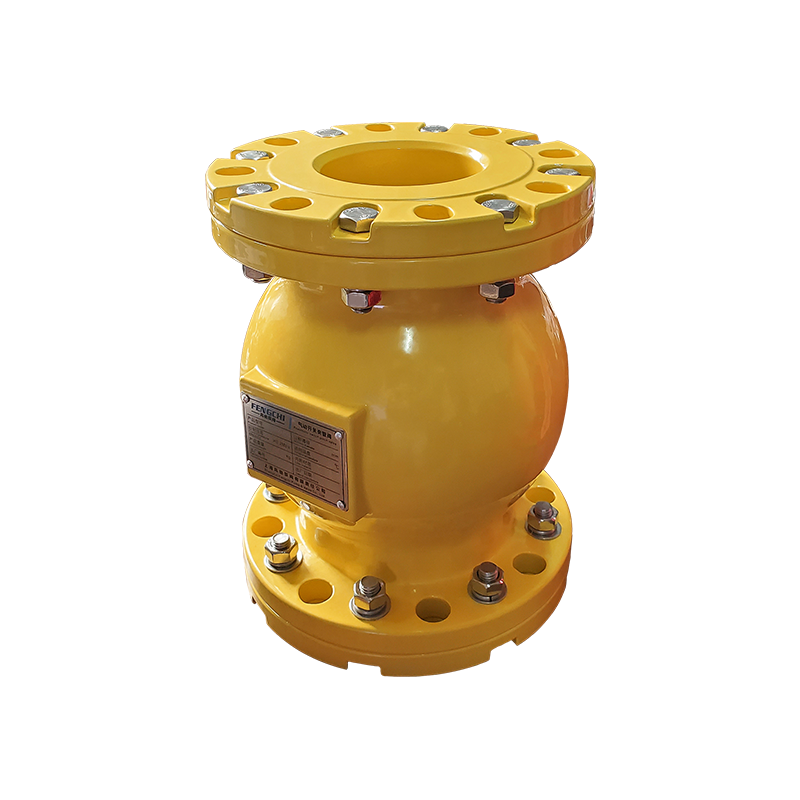 Air-Operated Pinch Valves for Automated Slurry and Sludge LinesRubber sleeve is the only wetted part, enabling clog-resistant full-bore flow and control-system actuation for abrasive slurry or sludge duties.View Product →
For automated zones, an air-operated unit ties the valve to the plant control system while keeping the full-bore flow path that slurry and sludge lines require.
Where the media is abrasive rather than clean, the sequence stays the same but the valve type changes. Grit, screenings, mill scale and mineral slurry cut through soft-seated valves quickly, so a full-port knife gate with a replaceable wear liner is often a better isolation answer than a resilient-seated gate valve. The same logic is set out in more detail in this slurry knife gate valve selection guide.
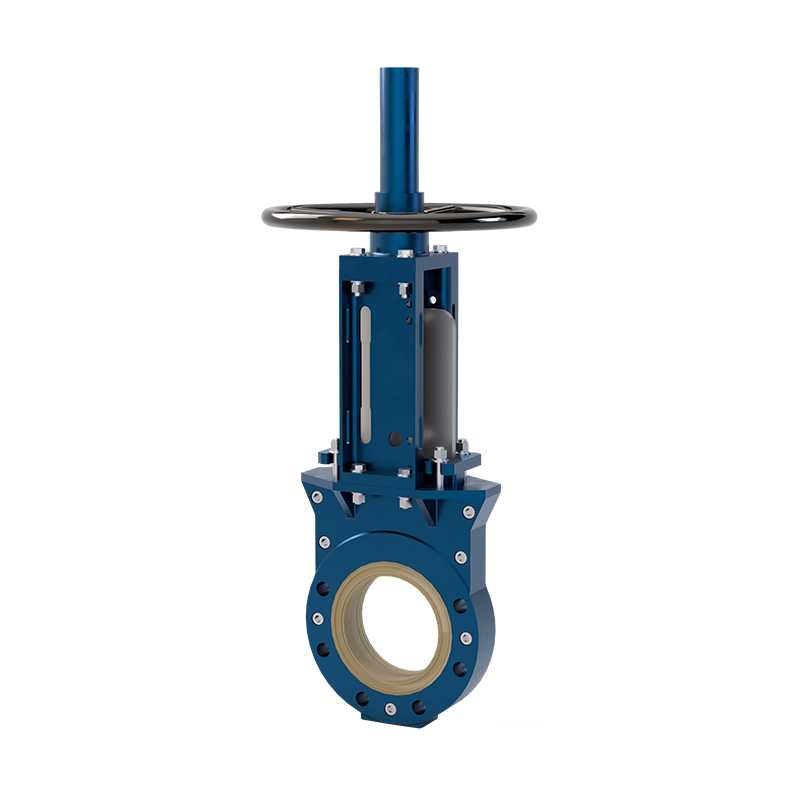 KGV-PU Polyurethane-Lined Knife Gate Valves for Abrasive SlurryFully lined polyurethane body and full-bore knife gate resist high-solids, high-velocity slurry where soft-seated valves wear quickly.View Product →
Series built around a polyurethane-lined or otherwise reinforced body are usually reserved for the lines where solids content and velocity are both high.
Valves fail slowly and quietly. A setpoint that drifts by two or three psi without any change in demand usually points to a fouled pilot, a swollen diaphragm or a partly blocked sensing line rather than a system change.
Chemical dosing loops deserve separate attention. Polymer, lime and coagulant feed lines are often better served by a peristaltic or hose pump than by any valve sitting in the flow path, because the pump meters the dose and nothing obstructs the line.
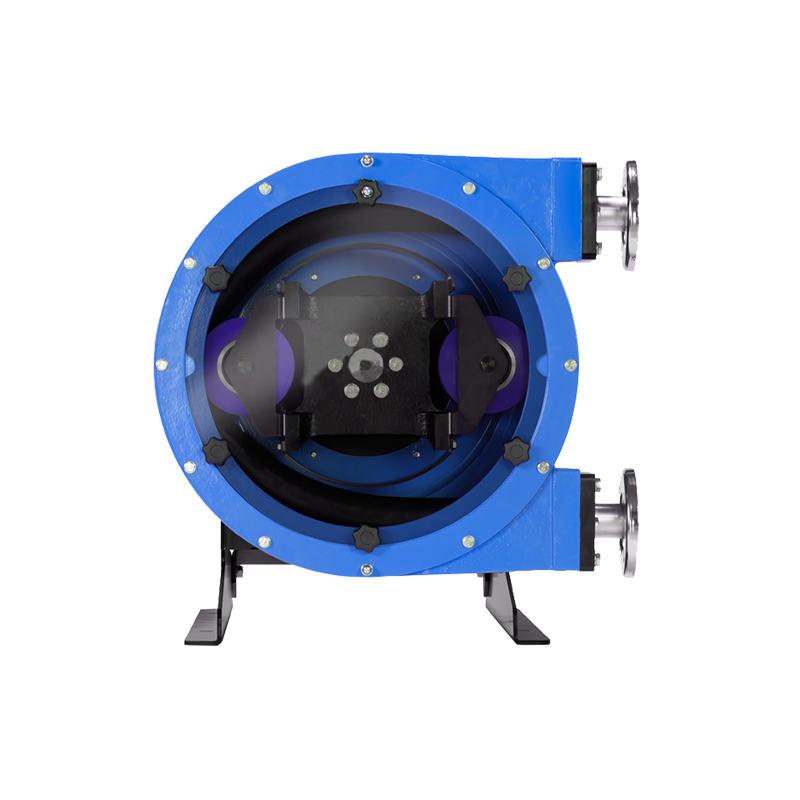 Roller Hose Pumps for Chemical Dosing and Abrasive MediaPeristaltic hose pump meters chemical doses and transfers abrasive or viscous media with only the hose contacting the fluid.View Product →
Roller-style hose pumps are a common fit here, since the only wear part is the hose itself and dosing accuracy stays stable as the hose ages.
AWWA flow control products are not a catalogue category. They are a standards-driven answer to a defined duty, and the fastest way to avoid a wrong purchase is to name the function before naming the valve. Regulation goes to C530, isolation to C504, C507, C509 or C515, backflow prevention to C508, and the actuator and coating follow from C540 and C550.
Once the standard is fixed, the remaining decisions are ordinary engineering: cavitation check at the worst case, sizing at the low-flow end, sensing line in straight pipe, fail position agreed with operations, and spare pilots on the shelf. Utilities that work in that order tend to buy fewer valves and replace them less often.
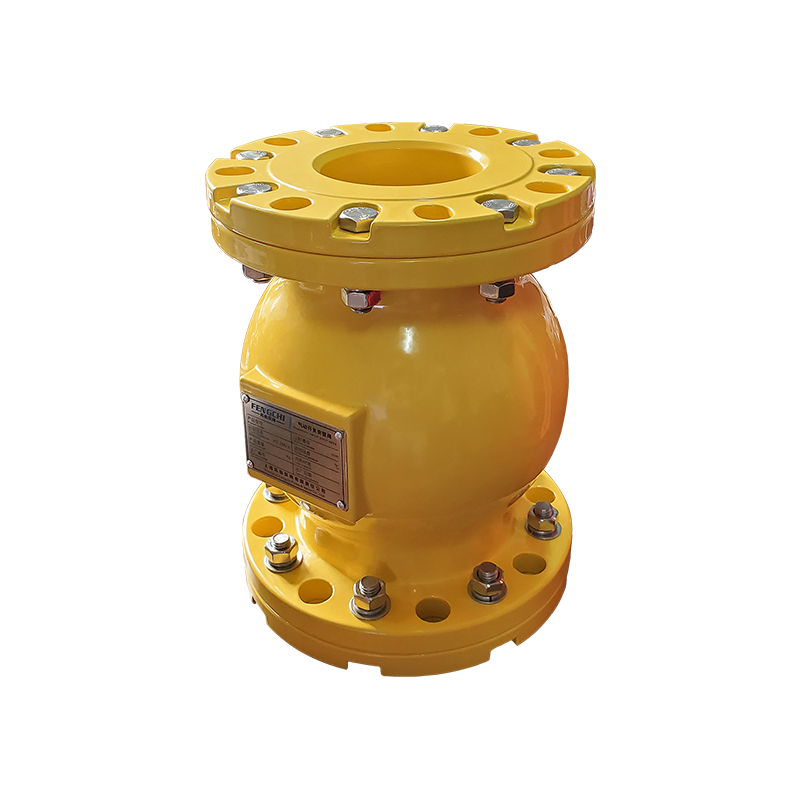
Air Operated pinch valves offer a unique and cost-effective solution for fluid control problems. The secret lies in the rubber valve sleeve - the onl...
See Details
Phone: +86-136 7173 4086

Tel: +86-563 5033 866

Email: red@pinchvalves.com.cn

Address:
