

 EN
EN

 English
 русский
 Español
Closed Body Pinch Valve
Cat:Pinch Valves
The operating principle of the FNC® enclosed pinch valve is straightforward. When in the open position, the valve provides a full-bore passage, allowi...
See DetailsContent
In mining, tailings transport, and mineral processing pipelines, the flow medium is rarely clean water. Slurry — a suspension of solid particles in liquid — presents a set of mechanical challenges that expose the fundamental limitations of valves designed for general-purpose service. When a conventional gate, ball, or butterfly valve is installed in a high-solids slurry line, failure is not a matter of if but when.
The three failure modes appear consistently across industries and operating conditions. Blockage occurs when solid particles accumulate in the valve's internal cavities, seats, or around the closure element during partial or full closure. Unlike water, slurry does not drain cleanly when flow stops — solids settle and compact, locking the valve in place or preventing full closure. Accelerated seat and body wear follows from the continuous abrasive action of mineral particles against metal surfaces. In valves with reduced-bore designs or irregular internal geometries, flow velocity increases at constriction points, concentrating erosion and shortening service life from years to weeks. Incomplete closure is the third failure mode: seats fouled with compacted solids or worn by abrasion can no longer achieve the sealing contact required for reliable isolation, creating leakage paths that grow progressively worse with each cycle.
These failures translate directly into unplanned downtime, maintenance labor, and the cost of emergency valve replacements — expenses that compound in remote mining operations where parts and technicians are difficult to mobilize quickly. Addressing the root cause requires a valve architecture purpose-built for slurry service, not a standard valve adapted for it.
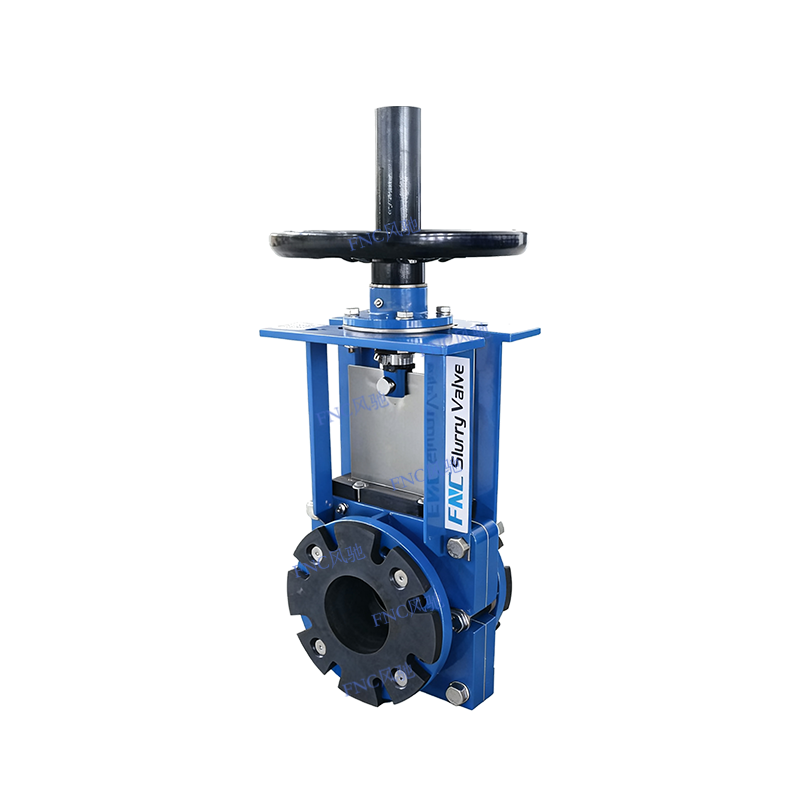
A slurry knife gate valve solves the blockage, wear, and closure problems of conventional valves through two design principles that work together: a straight-through full-bore flow path and a sharp-edged gate that cuts through dense media rather than compressing or diverting it.
In the open position, the gate retracts completely out of the flow path. The internal bore matches the pipe diameter, eliminating the constrictions and cavities where solids accumulate in conventional designs. Flow passes through without turbulence, velocity spikes, or particle concentration — conditions that drive erosion in reduced-bore alternatives. With no internal pockets for solids to settle into, the open valve remains free-running regardless of how long the line has been idle.
In the closing stroke, the gate descends in a direct linear motion. The sharp leading edge slices through suspended solids, fibrous materials, and dense sediment rather than attempting to compress them against a seat. This cutting action is what allows the valve to achieve complete closure in media that would jam or hold open a conventional wedge gate or ball valve. The linear gate movement is mechanically simple and imposes no lateral forces on the valve body, reducing sensitivity to particle size variation and minimizing the mechanical stress that causes jamming during operation.
When fully closed, the gate bears against flexible sealing elements — typically elastomeric sleeves or bi-directional rubber seats — that conform around the gate face to create a reliable seal even when fine solids are present. The result is a valve that can cycle reliably in service conditions where conventional isolation equipment lasts only days or weeks. Explore our full range of slurry knife gate valves to see available configurations and specifications.
Slurry knife gate valves are installed wherever a pipeline system carries high-solids media and requires reliable on/off isolation. Three operational environments account for the large majority of installations.
Mining ore slurry lines carry freshly crushed ore mixed with process water from primary crushing and grinding circuits to downstream separation and concentration stages. Solid content in these streams can exceed 40% by weight, with abrasive mineral particles — silica, iron oxides, sulfide minerals — that rapidly erode standard valve components. Knife gate valves at mill discharge, sump pump outlets, and thickener feed points provide the isolation capability needed to isolate sections for maintenance without shutting down the entire circuit.
Tailings transport systems present a more demanding set of conditions. Modern mining water reclamation programs have produced tailings slurries that are denser, more viscous, and more erosive than the dilute streams of earlier operations. Thickened tailings must be pumped over long distances — sometimes several kilometers — to storage facilities, with valves at pump stations, spigot distribution points, and pond inlet manifolds required to handle both the abrasive media and the elevated line pressures that long-distance pumping generates. Valves that underperform in these positions create leakage, flooding, and environmental risk at points that are difficult and costly to access for emergency repair.
Mineral processing circuits — including flotation, leaching, and gravity separation operations — require isolation valves at cyclone feeds, thickener underflows, filter press inlets, and reagent dosing manifolds. Each of these positions has a distinct combination of solid content, particle size distribution, chemical aggressiveness, and operating pressure that influences material selection and sealing configuration. The knife gate valve's mechanical simplicity and full-bore design make it the default isolation choice across the majority of these positions in both greenfield plant designs and retrofit applications replacing worn conventional valves.
Long service life in slurry applications depends on matching valve body and gate materials to the specific abrasive and chemical characteristics of the process medium. No single material combination is optimal across all slurry types — the correct selection requires evaluating particle hardness, solid concentration, pH, temperature, and operating pressure together.
| Material | Abrasion Resistance | Corrosion Resistance | Typical Application |
|---|---|---|---|
| Cast Iron (GG25) | Moderate | Low | Neutral pH slurries, low-pressure general mining service |
| Cast Steel (WCB) | Good | Moderate | Higher-pressure circuits, moderate abrasion, general mineral processing |
| Stainless Steel (SS316) | Good | Excellent | Acidic or alkaline slurries, chemical processing, corrosive tailings |
| Hardened Gate with Wear-Resistant Sleeve | Excellent | Good–Excellent | High-silica ore slurry, tailings with coarse aggregate, severe erosion service |
The elastomeric sleeve is the most critical wear component in a slurry knife gate valve. It provides the sealing surface, absorbs gate impact during closure, and protects the body from direct contact with abrasive media. Natural rubber offers excellent abrasion resistance for coarse-particle slurries at ambient temperatures. EPDM is preferred for oxidizing chemical environments. Neoprene and Nitrile are selected for oil-containing or hydrocarbon-contaminated streams. The sleeve is designed as the sole replaceable wear part — when it reaches the end of its service life, replacement requires no special tooling, no body machining, and no line modification, keeping maintenance time and cost to a minimum.
For the most severe applications — high-silica tailings, dense ore slurries at elevated pressure, or streams with large aggregate particles — our flanged slurry knife gate valve incorporates reinforced heavy-duty sleeves manufactured with proprietary vulcanization technology, delivering measurably longer service intervals compared to standard elastomeric components.
The gate in a slurry knife gate valve can be driven by several actuation methods, each suited to different operational requirements, automation levels, and installation environments. The correct actuator selection affects cycle speed, remote control capability, fail-safe behavior, and total installed cost.
Manual handwheel actuation is the simplest and most cost-effective option for valves that are operated infrequently and are accessible to on-site personnel. Manual valves are reliable in power-failure scenarios and require no control wiring or compressed air supply. They are well suited to maintenance isolation points, sampling connections, and low-cycling secondary lines.
Pneumatic actuators — single-acting spring-return or double-acting — are the most common choice in mining and mineral processing plants where instrument air supply is available and fast, repeatable valve cycling is required. Pneumatic actuators can be configured for fail-open or fail-closed operation, integrating with plant emergency shutdown systems without requiring electrical power at the valve. Cycle times of 5–15 seconds are typical for standard bore sizes.
Electric actuators suit applications where compressed air is unavailable or where precise position feedback and integration with digital control systems are priorities. Modern electric actuators provide torque monitoring, partial stroke testing capability, and direct fieldbus communication with distributed control systems — functions that support predictive maintenance programs in automated plant environments.
Hydraulic actuators deliver the highest force output for large-diameter valves or high-pressure service where pneumatic actuators lack sufficient thrust. They are selected for valves in DN400 and above in high-pressure tailings pump circuits, where the force required to close against full line pressure and dense media exceeds the practical range of pneumatic designs.
Correct valve selection is the single most important factor in achieving acceptable service life and reliability in slurry applications. A valve that is correctly specified for its service conditions will consistently outperform an over-engineered valve installed in the wrong configuration. The following checklist covers the parameters that should be defined before specifying a slurry knife gate valve for any new or replacement installation.
Fengchi's engineering team works directly with procurement and project engineering teams to match valve specifications to specific service conditions — including non-standard bore sizes, custom sleeve compounds, and actuator integration requirements. To discuss your application or request a technical quotation, contact us directly.
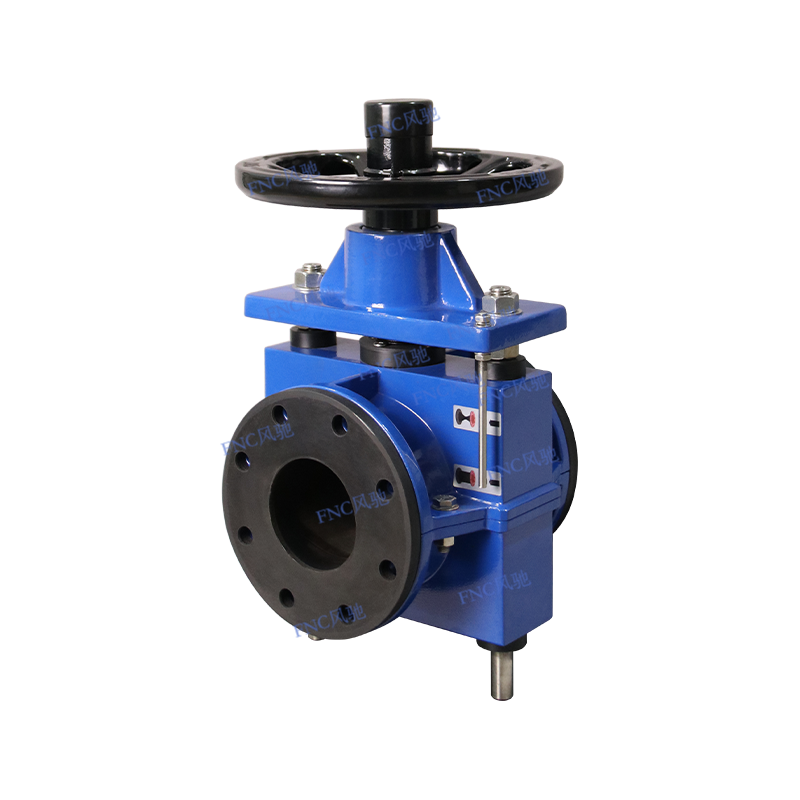
The operating principle of the FNC® enclosed pinch valve is straightforward. When in the open position, the valve provides a full-bore passage, allowi...
See Details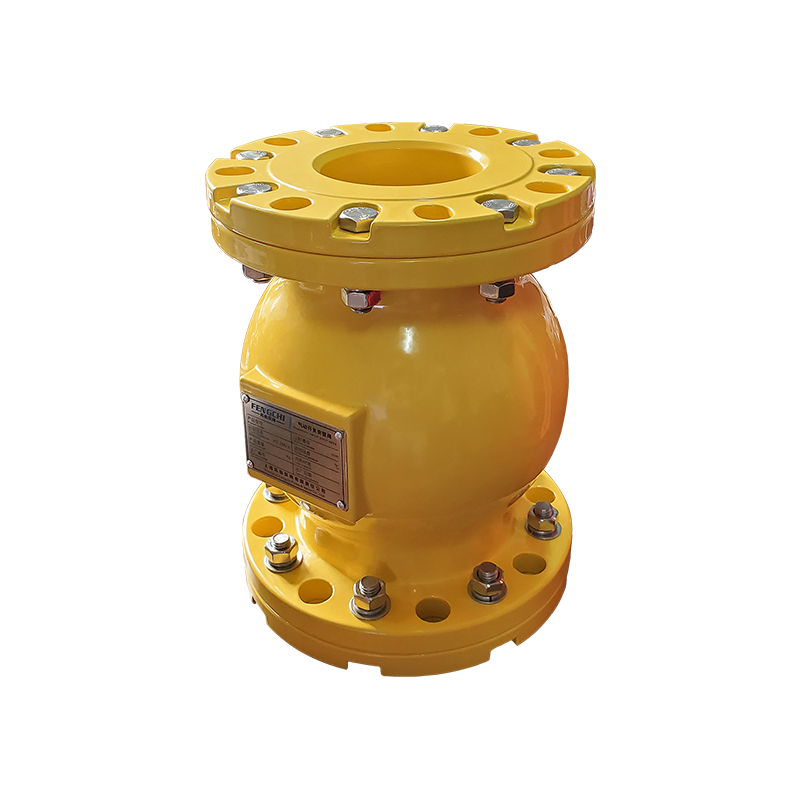
Air Operated pinch valves offer a unique and cost-effective solution for fluid control problems. The secret lies in the rubber valve sleeve - the onl...
See Details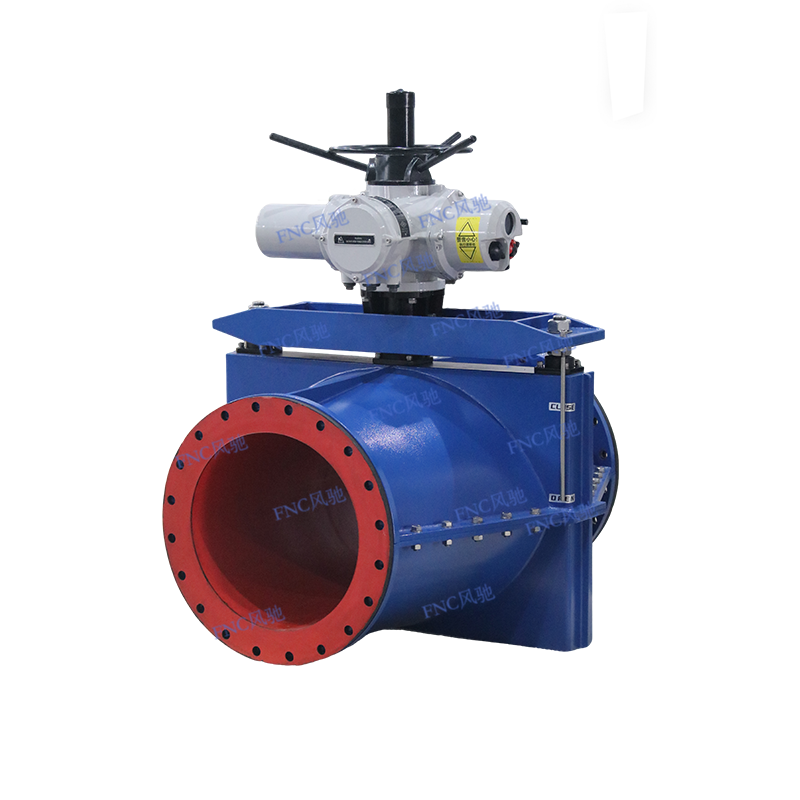
Compared to ordinary pinch valves, large-diameter pinch valves have much higher production requirements. As the “core component” of the pinch valve, t...
See Details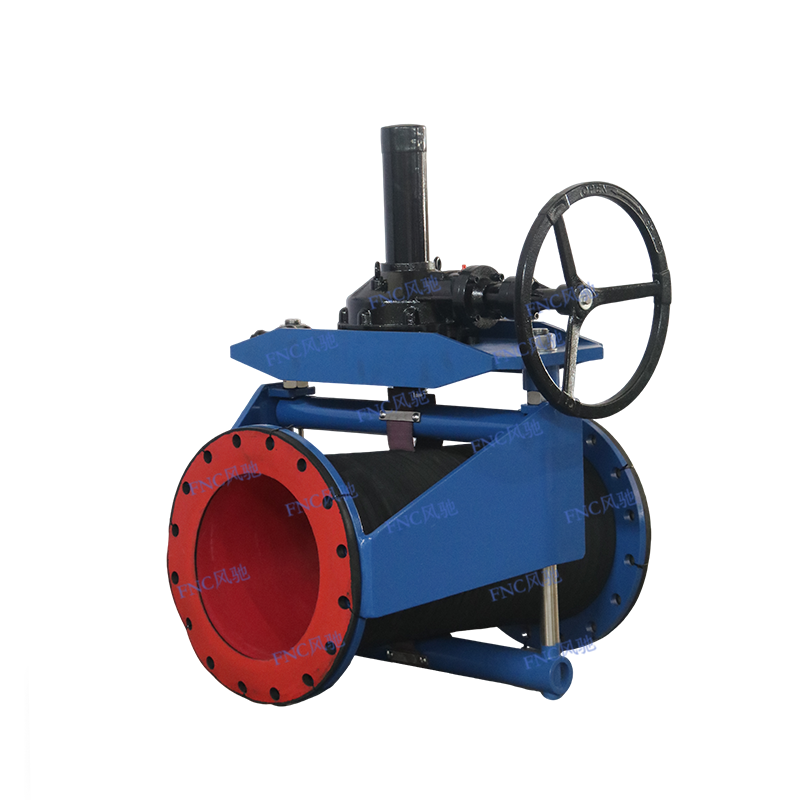
The operating principle of the FNC® enclosed pinch valve is straightforward. When in the open position, the valve provides a full-bore passage, allowi...
See Details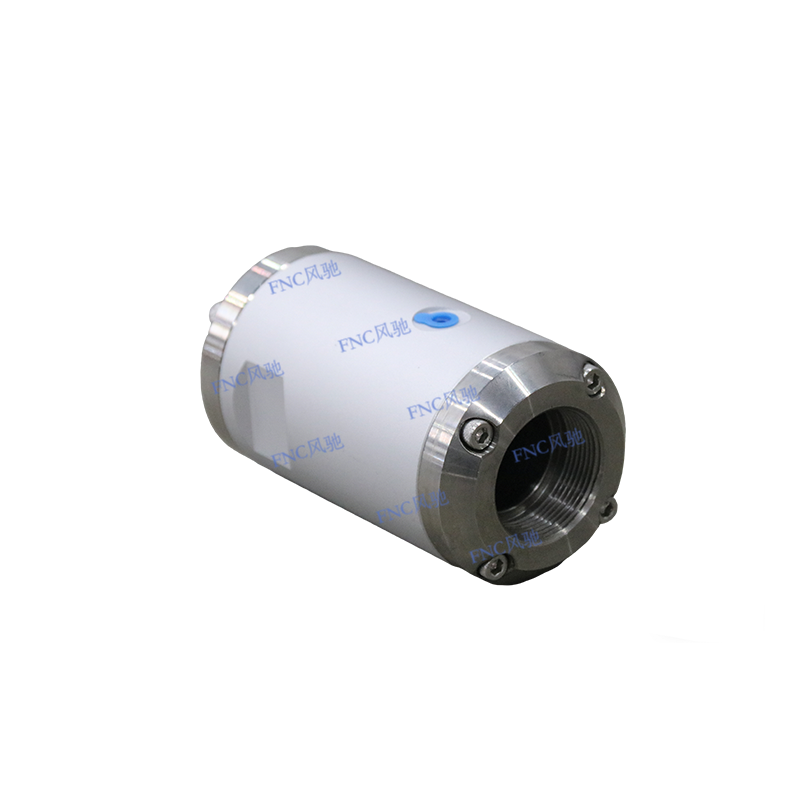
Air Operated pinch valves offer a unique and cost-effective solution for fluid control problems. The secret lies in the rubber valve sleeve - the onl...
See Details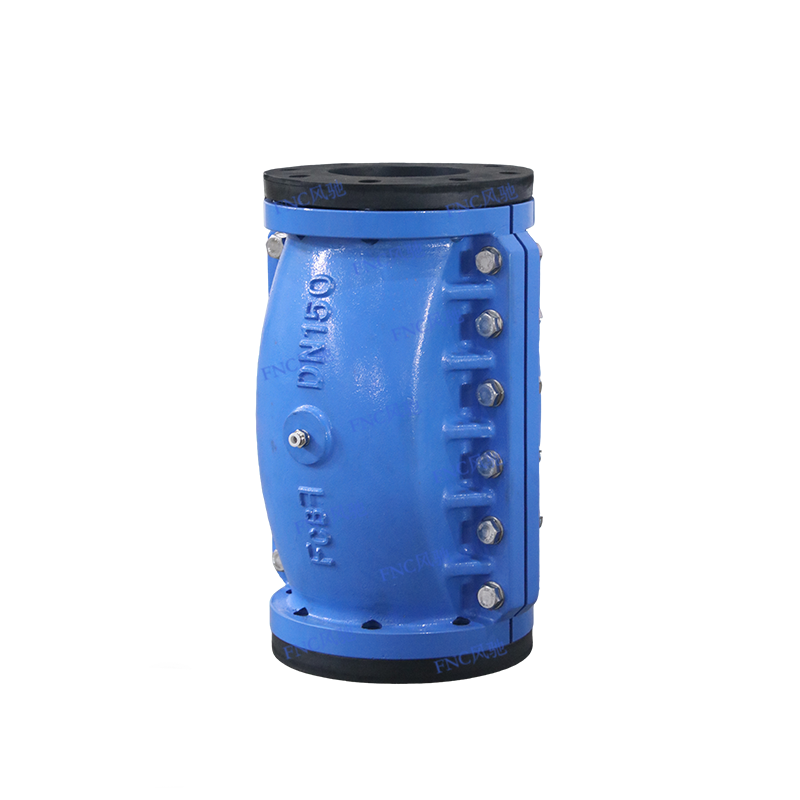
Air Operated pinch valves offer a unique and cost-effective solution for fluid control problems. The secret lies in the rubber valve sleeve - the onl...
See Details
Phone: +86-136 7173 4086

Tel: +86-563 5033 866

Email: red@pinchvalves.com.cn

Address:
