

 EN
EN

 English
 русский
 Español
Standard Air Operated Pinch Valves
Cat:Air Operated Pinch Valves
Air Operated pinch valves offer a unique and cost-effective solution for fluid control problems. The secret lies in the rubber valve sleeve - the onl...
See DetailsA slurry pipeline running 24 hours a day is, in mechanical terms, a continuous abrasion test. Hard particles suspended in liquid — ore fragments, tailings, quartz sand — strike every surface they pass. For conventional valves, that means accelerating wear, repeated seal failures, and maintenance cycles that chip away at production schedules. For the right wear resistant slurry valve, it means normal operating conditions.
This article examines why large mines are replacing conventional valve technology, what genuine wear and corrosion resistance requires at the engineering level, and how to evaluate a maintenance-free slurry valve against the total cost it will carry over its service life.
Content
Standard gate valves, ball valves, and butterfly valves are designed around clean or lightly contaminated fluids. When deployed in mining slurry service — tailings transport, mineral processing feed lines, pump discharge circuits — they encounter three failure modes that their designs were never intended to handle.
Abrasive erosion of seating surfaces. Ball valve seats and gate valve faces rely on precise metal-to-metal or soft-seated contact to achieve shut-off. Abrasive particles suspended in slurry act as a grinding compound every time the valve cycles. Within months, seating surfaces lose the geometry needed for positive closure. Leakage increases, full shut-off becomes impossible, and the valve must be pulled from service.
Internal cavities in conventional valves create settling zones. When slurry flow stops — during a shift change, a scheduled outage, or an unplanned stop — solids accumulate in pockets around the gate or ball. Restarting with a partially packed valve body risks gate jamming, actuator overload, and body fracture under hydraulic pressure.
Many mining slurries carry chemical loads alongside abrasive solids. Acid mine drainage, leach circuit slurries, and flotation reagent streams attack carbon steel and standard cast iron progressively. Corrosion removes material from valve internals, accelerates wear at the points of contact, and ultimately compromises structural integrity. The combination of simultaneous abrasion and corrosion reduces service life far below either factor alone.
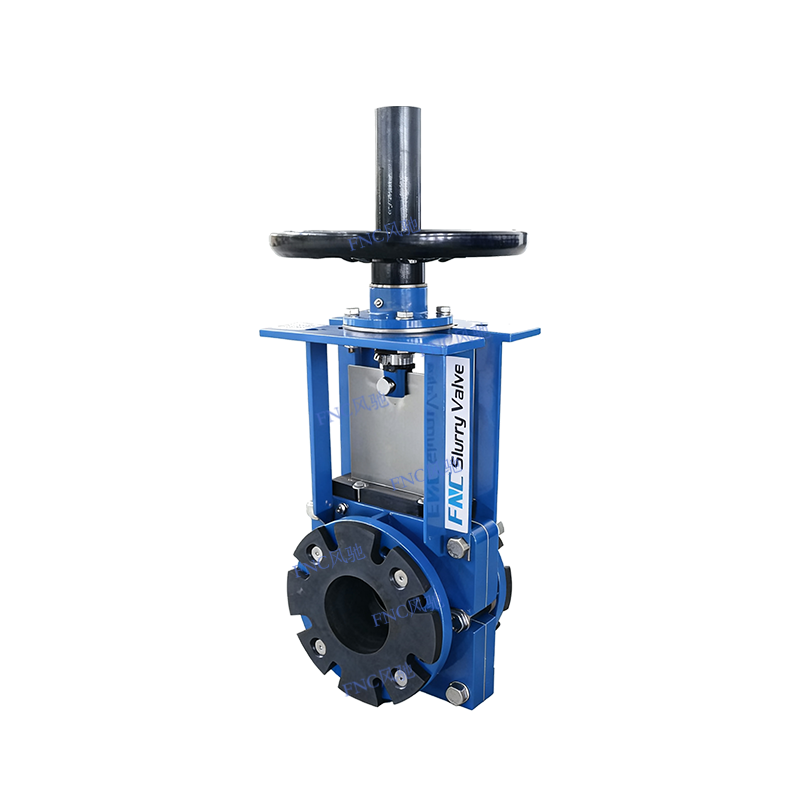
The result is a maintenance cycle that absorbs technician hours, spare parts inventory, and planned-shutdown time at a rate that standard procurement budgets rarely anticipate. Replacing these valves with purpose-built slurry knife gate valves designed for abrasive mining applications eliminates the structural mismatch at the source.
The term wear resistance appears on most valve datasheets. In slurry service, it requires a precise engineering definition rather than a marketing claim.
Wear in slurry applications is primarily governed by three variables: particle hardness (measured in Mohs scale), particle size distribution, and flow velocity at the point of contact. A valve rated for fine tailings slurry at 1.5 m/s may degrade rapidly when handling coarse ore fragments at 3 m/s. Material selection must be matched to the actual operating profile, not a generic "abrasion-resistant" category.
Effective wear resistant designs address the problem through two parallel strategies. First, the flow path geometry is engineered to minimize turbulence and impingement angles. Slurry traveling in a straight, full-bore path through an open valve body erodes surfaces far less aggressively than slurry forced around curves, through restricted openings, or against flat-faced obstructions. Knife gate valves achieve this through their linear gate movement and straight-through bore — the gate either fully clears the flow path or shears cleanly through the slurry column on closure.
Second, surfaces in contact with media are constructed from materials with substantially higher hardness than the particles they face. High-chromium white iron, polyurethane linings, natural rubber sleeves, and tungsten carbide coatings each address specific combinations of particle type, chemical environment, and operating pressure. Matching liner material to particle hardness and chemical composition is the single most consequential decision in slurry valve selection.
Corrosion resistance follows similar logic. Elastomeric linings — natural rubber, EPDM, or polyurethane — present no metallic surface to acidic or alkaline media at all. The flow contacts only the sleeve, which can be replaced without disturbing the valve body. This design separates wear from structure: the body maintains mechanical integrity while the sleeve absorbs chemical attack.
Purchase price is the most visible number in a valve procurement decision and the least useful for evaluating actual cost. Industry data consistently shows that the initial purchase price of an industrial valve typically represents only 10–15% of its total cost of ownership. The remaining 85–90% accumulates through maintenance labor, spare parts consumption, energy losses from degraded flow performance, and — most significantly — unplanned production downtime.
In large mining operations, a single unplanned process shutdown carries costs that dwarf the installed price of any valve. Conveyor stoppages, pump cavitation from restricted flow, and slurry line blockages cascade through interconnected systems. When a failed valve forces a partial plant shutdown, the cost per hour runs into tens of thousands of dollars in lost throughput alone, before accounting for emergency maintenance labor, expedited parts sourcing, and restart procedures.
A conventional valve replaced three times over five years — each replacement accompanied by a maintenance window, labor cost, and parts procurement — consistently carries higher total cost than a wear-resistant alternative with a higher unit price and a single planned sleeve replacement in the same period. The arithmetic is straightforward; the challenge is making it visible at the point of purchase.
Total cost of ownership analysis shifts the evaluation from unit price to cost-per-operating-hour. For mines running continuous operations, this metric reliably favors purpose-built slurry valves over adapted conventional designs, regardless of the initial price differential.
The term "maintenance-free" in industrial valve specifications requires careful reading. No mechanical component is genuinely maintenance-free in perpetuity. What the designation properly describes is a design that eliminates the frequent, labor-intensive maintenance cycles that conventional valves require — scheduled repacking, seat lapping, gland adjustment, and body inspection — while reducing interventions to periodic sleeve or liner replacement that can be completed quickly and without specialized tools.
Pinch valves achieve this through a fundamentally different operating principle. The flow-contacting element is a flexible elastomeric sleeve spanning the full bore. The valve body — housing, end flanges, and actuating mechanism — never contacts the media at all. Abrasion, corrosion, and scaling act exclusively on the sleeve. When the sleeve reaches the end of its service life, replacement is straightforward: remove the body fasteners, extract the worn sleeve, install a new one. No lapping, no precision fitting, no specialized maintenance equipment.
For applications requiring automated flow control, air operated pinch valves for automated flow control extend this maintenance-free characteristic to the actuation system. Pneumatic operation eliminates the gland packing and stem sealing that represent the most frequent failure points in conventionally actuated designs.
Knife gate valves achieve similar results through replaceable seat and gate geometry. The gate surface and seating elements are engineered as serviceable components, replaceable in the field without removing the valve body from the pipeline. Combined with a straight-through bore that prevents solids accumulation, this design reduces maintenance interventions to predictable, planned replacements rather than reactive emergency repairs.
Valve selection for mining slurry service begins with characterizing the media, not browsing product catalogs. Four parameters determine which valve type and material combination will perform reliably in a specific application.
Particle characteristics: Maximum particle size, size distribution (uniform vs. widely graded), and hardness (Mohs scale). Coarse, hard particles in a widely graded distribution represent the most aggressive wear condition and require maximum bore clearance and hardest liner materials.
Chemical environment: pH range, presence of oxidizing agents, temperature. Highly acidic or alkaline slurries favor elastomeric-lined valves where the sleeve material can be specified for chemical compatibility. Neutral slurries with high abrasive loading may be better served by ceramic or polyurethane linings optimized for wear rather than chemical resistance.
Operating pressure and cycling frequency: High-pressure applications — pump discharge lines, long-distance transport pipelines — require pressure-rated body construction and verified sealing performance under line pressure. Valves cycling frequently in automated control circuits require actuation systems rated for the expected cycle count.
Function required: Isolation (on/off) and flow regulation impose different design requirements. Knife gate valves excel at reliable isolation in high-solids service. Pinch valves handle both isolation and throttling in abrasive and corrosive media where precise flow modulation is needed.
| Valve Type | Best Suited For | Key Advantage | Primary Limitation |
|---|---|---|---|
| Slurry Knife Gate Valve | High-solids isolation, tailings, coarse ore slurry | Cuts through settled solids; full-bore; replaceable seats | Not ideal for precise throttling |
| Pinch Valve (Manual / Pneumatic) | Abrasive, corrosive, or fibrous slurries; flow control | No metal-media contact; sleeve-only wear; quick replacement | Pressure range limited by sleeve rating |
| Standard Ball Valve | Clean or lightly contaminated fluids | Compact; reliable sealing in clean service | Seats erode rapidly in abrasive slurry |
For large mines operating continuous processes, the combination of pinch valves for corrosive and high-solids slurry service at chemical or fine-slurry control points and slurry knife gate valves at isolation and isolation-only positions covers the majority of pipeline valve requirements without introducing multiple competing maintenance requirements.
Anhui Fengchi Pump Valve Manufacturing Co., Ltd. specializes in both product families, with design and manufacturing capability certified to ISO 9001, ISO 14001, and ISO 45001 standards, and EU CE certification. As the lead drafting organization for China's national pinch valve industrial standard, Fengchi's engineering basis for slurry valve design reflects operational experience across large mines domestically and internationally — translating directly into wear resistance, corrosion resistance, maintenance-free operation, and cost-effectiveness that conventional valve suppliers are not positioned to match.
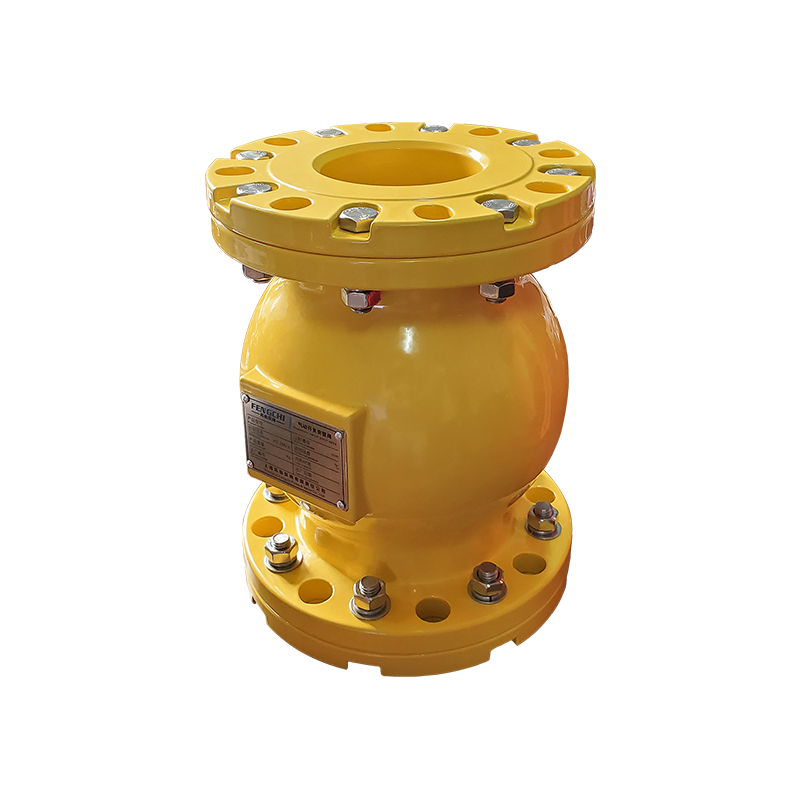
Air Operated pinch valves offer a unique and cost-effective solution for fluid control problems. The secret lies in the rubber valve sleeve - the onl...
See Details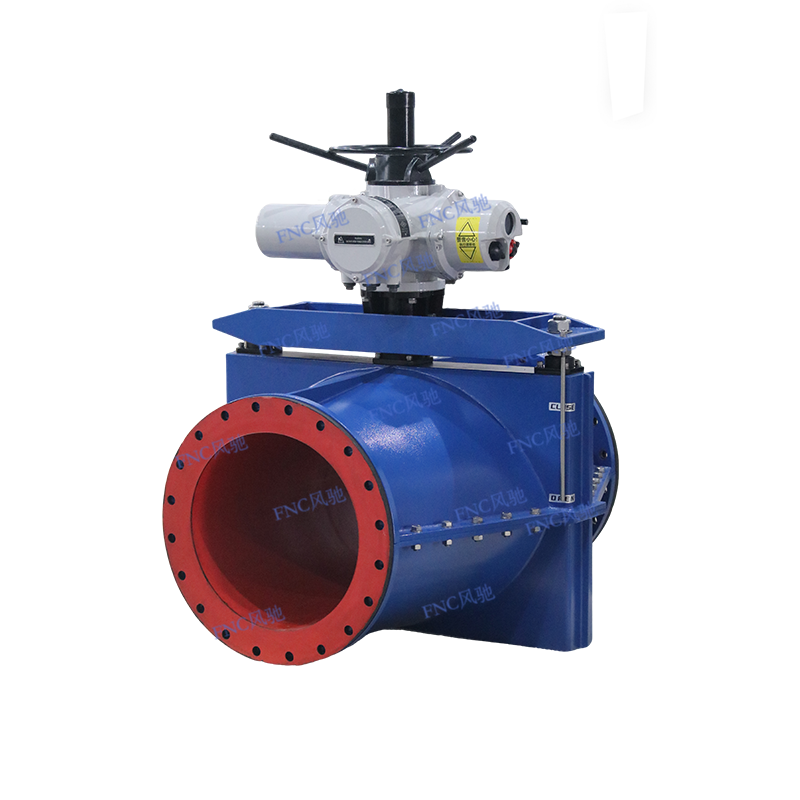
Compared to ordinary pinch valves, large-diameter pinch valves have much higher production requirements. As the “core component” of the pinch valve, t...
See Details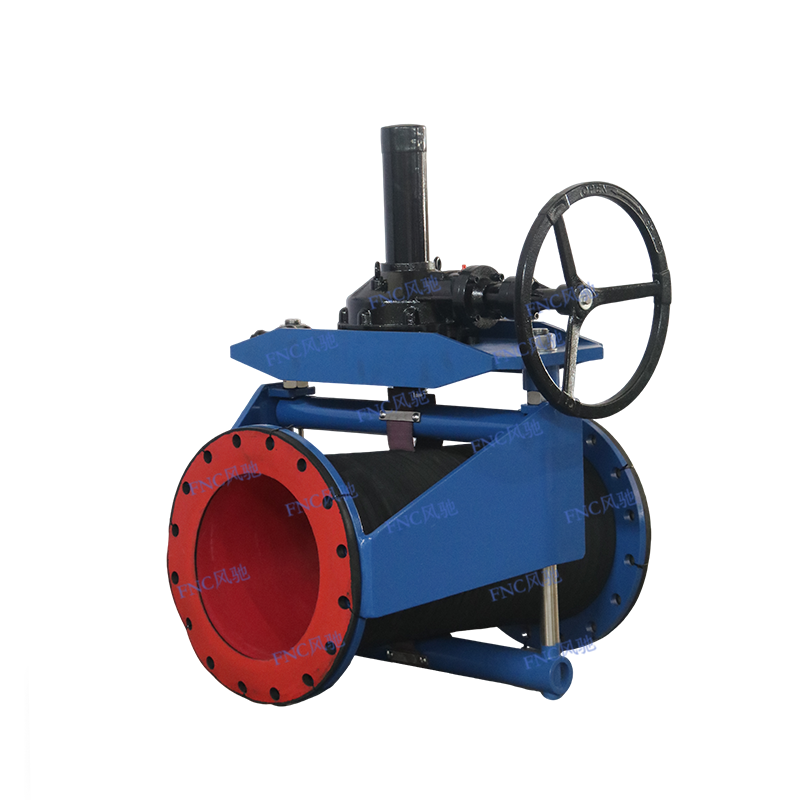
The operating principle of the FNC® enclosed pinch valve is straightforward. When in the open position, the valve provides a full-bore passage, allowi...
See Details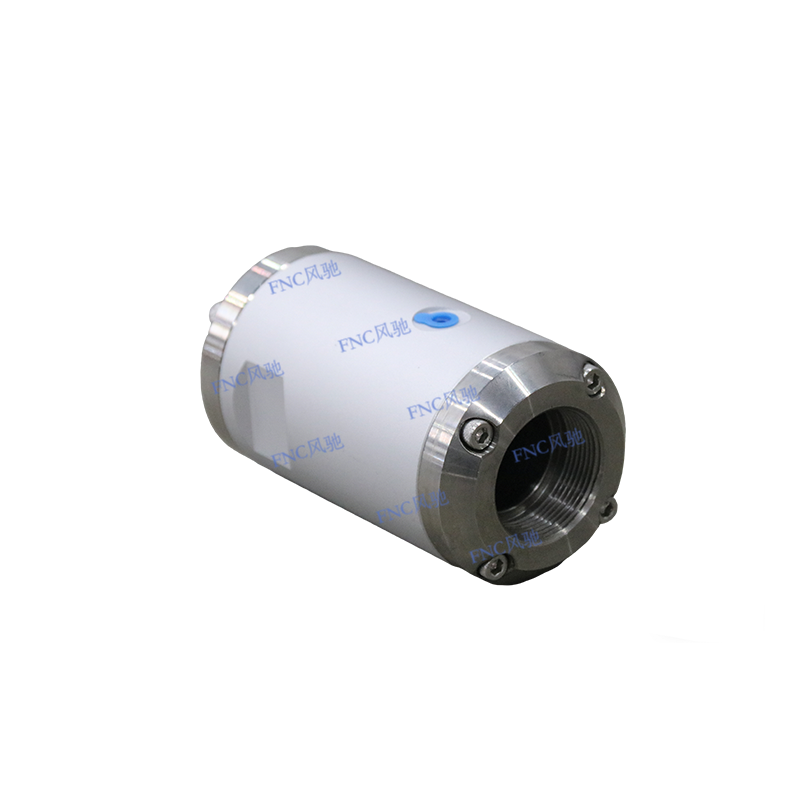
Air Operated pinch valves offer a unique and cost-effective solution for fluid control problems. The secret lies in the rubber valve sleeve - the onl...
See Details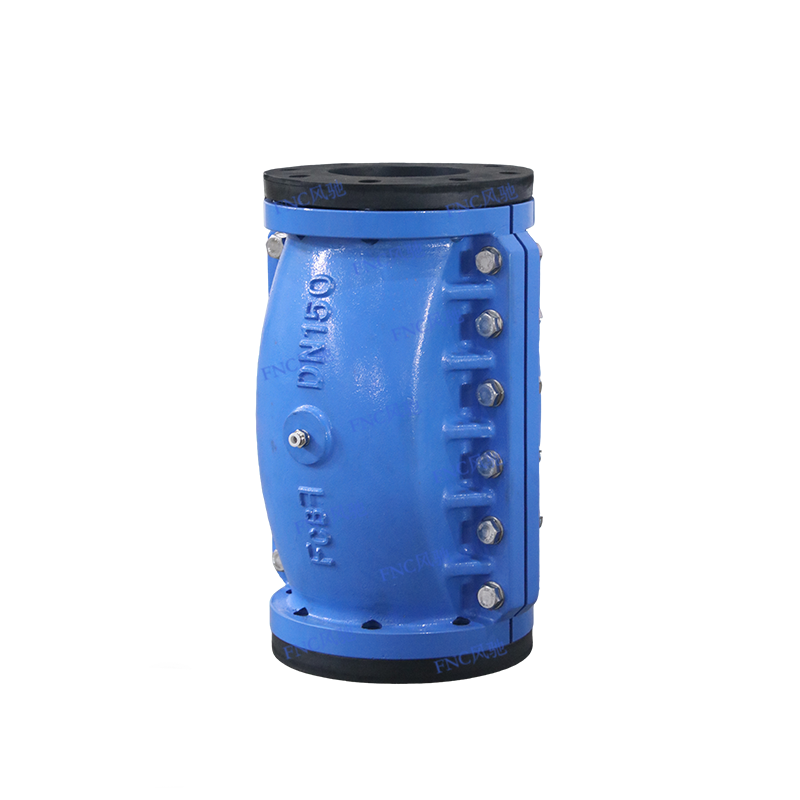
Air Operated pinch valves offer a unique and cost-effective solution for fluid control problems. The secret lies in the rubber valve sleeve - the onl...
See Details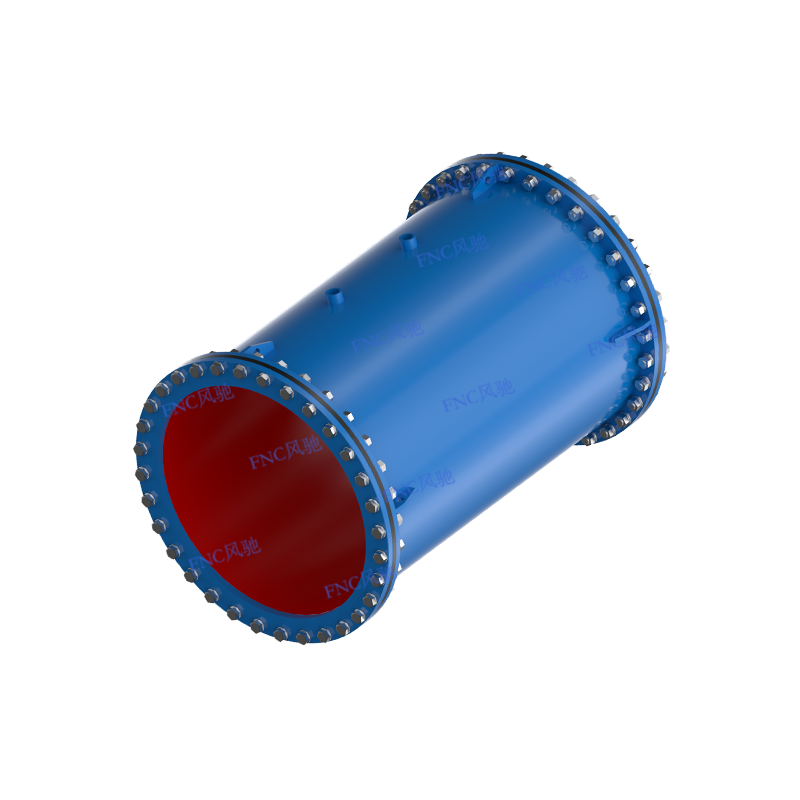
Air Operated pinch valves offer a unique and cost-effective solution for fluid control problems. The secret lies in the rubber valve sleeve - the onl...
See Details
Phone: +86-136 7173 4086

Tel: +86-563 5033 866

Email: red@pinchvalves.com.cn

Address:
