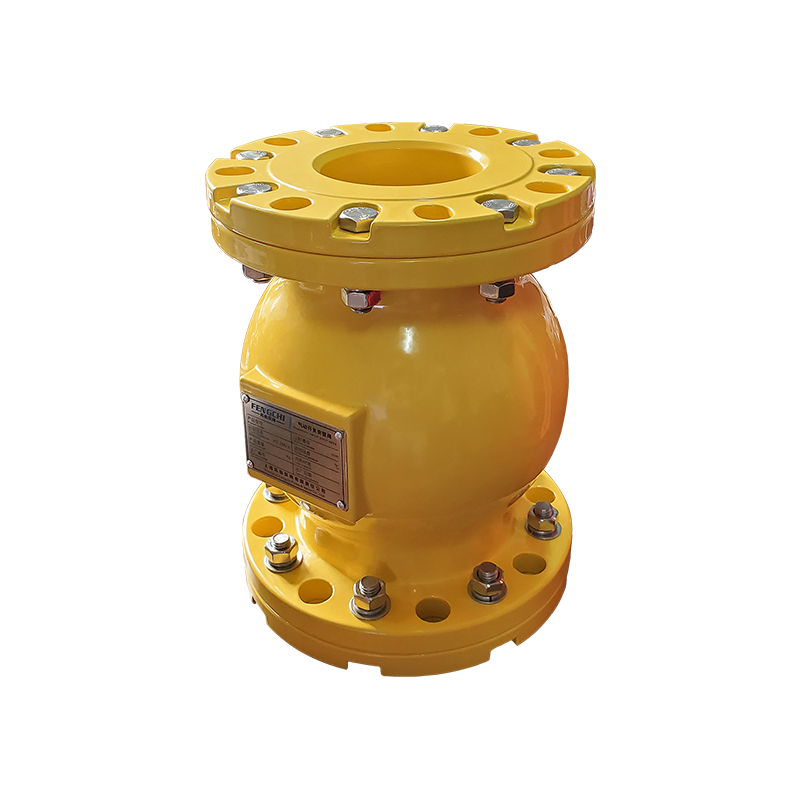
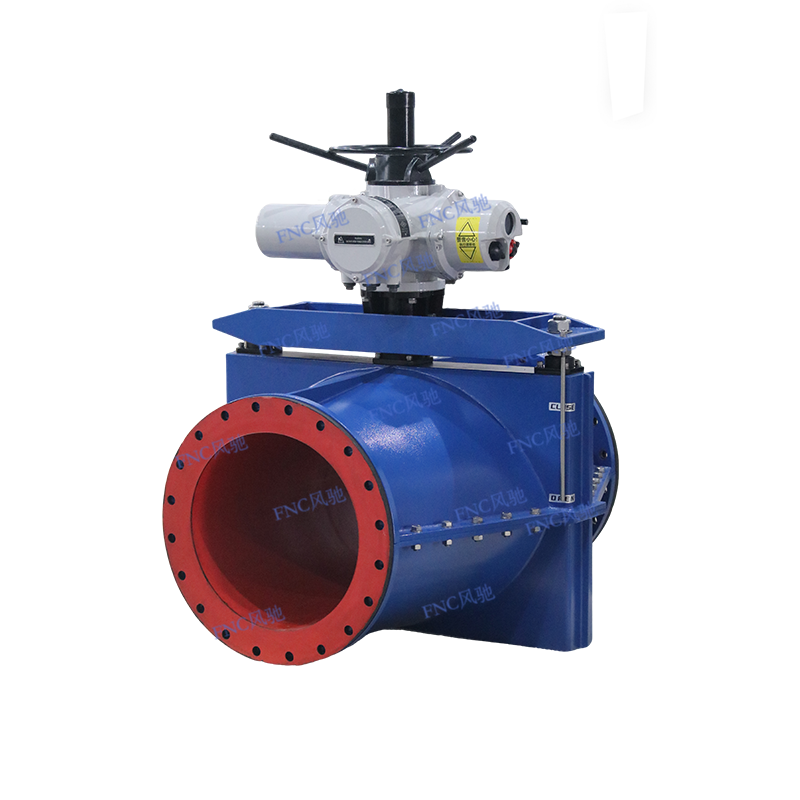
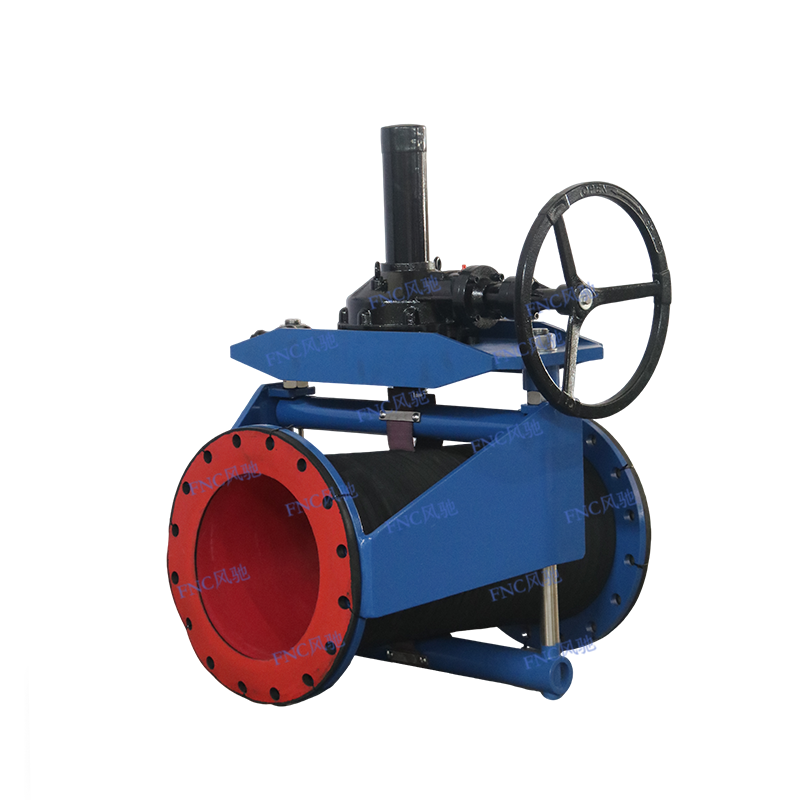
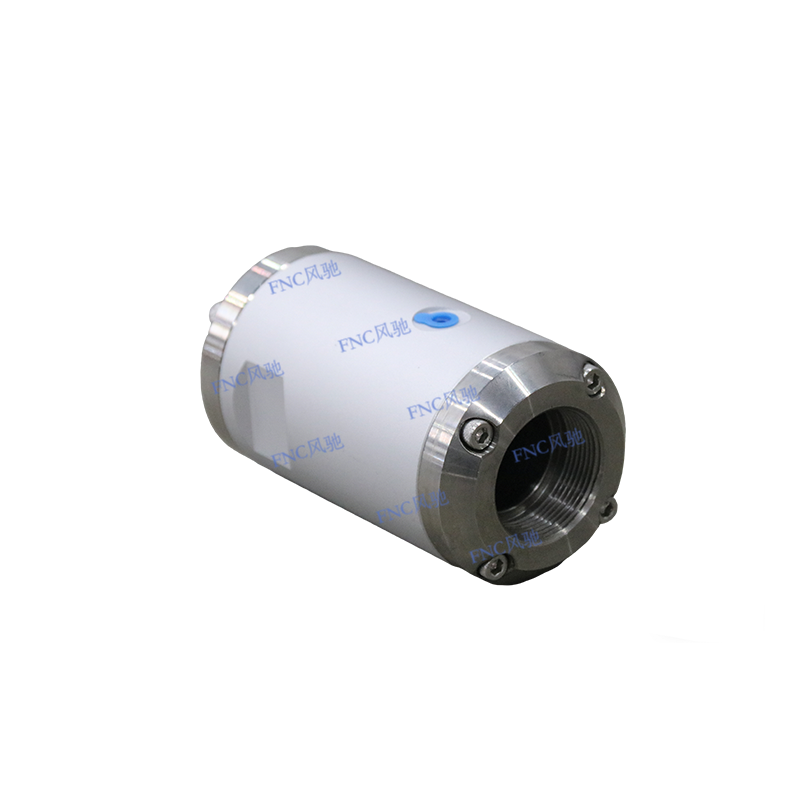
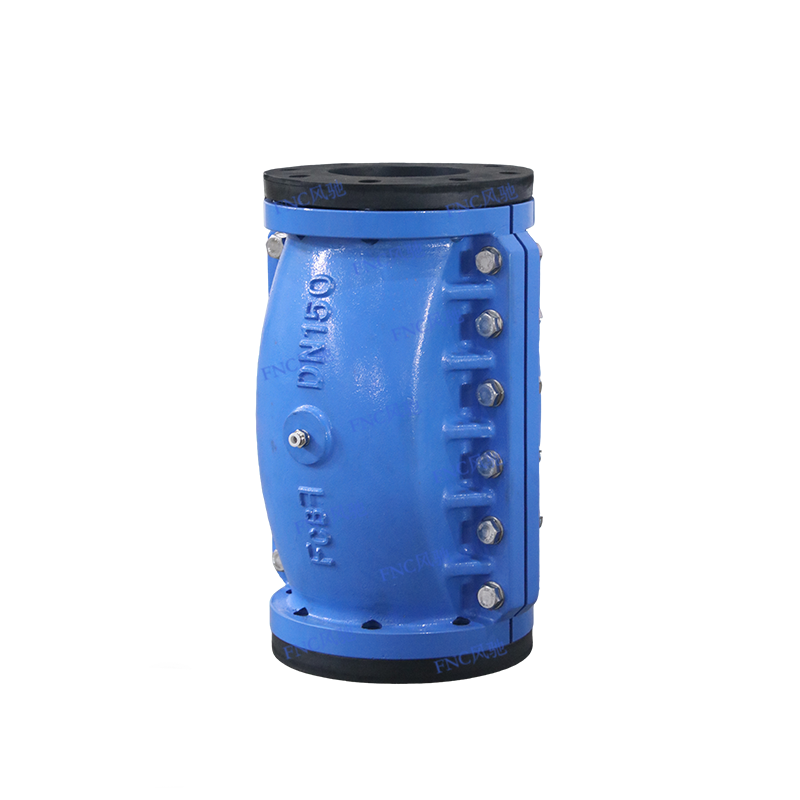
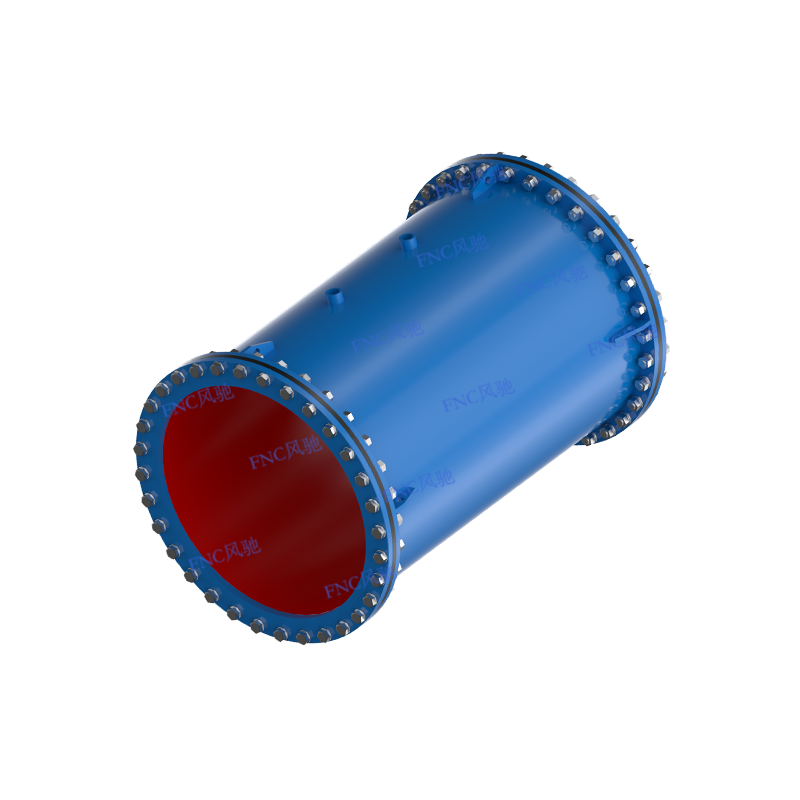
FNC Pinch valves (hose valves/squeeze valves) realize pipeline on-off and flow regulation by squeezing flexible hoses. Featuring zero leakage, excellent wear resistance, corrosion resistance and non-clogging performance, they are widely applied in mining, chemical industry, sewage treatment, food, pharmaceutical and other industries. Classified by driving modes, they fall into four types: manual, electric, pneumatic and hydraulic. Different driving modes determine the valve response speed, control accuracy, applicable working conditions and operation & maintenance costs. This article briefly summarizes the core differences among the four types of pinch valves to provide references for engineering selection.
I. Manual Pinch Valve (Economical Type)
Manual pinch valves are opened, closed and finely adjusted manually via handwheels or handles. With an extremely simple structure and no external power system, they are the most basic type of pinch valves.
Core Features
Adopting a purely mechanical structure, it requires no external energy such as electricity or air source. It boasts strong anti-interference capability, zero failure rate, good explosion-proof and dustproof performance and intuitive easy operation. Only the hose is a vulnerable part, leading to extremely low operation and maintenance costs.
Advantages & Disadvantages
Advantages: Low cost, easy installation, maintenance-free, high safety, and normal operation under power and gas cut-off conditions.
Disadvantages: Reliant on manual operation without remote automatic control; laborious operation and slow switching speed for large-caliber valves, poor flow regulation accuracy and low consistency.
Applicable Working Conditions
Small-caliber pipelines with low switching frequency and no automatic control demands; remote sites without power or air supply, equipment maintenance bypasses and small auxiliary pipelines.
II. Electric Pinch Valve (Precision Intelligent Type)
Driven by electric actuators that convert electric energy into mechanical squeezing force, it can be connected with PLC and DCS automatic systems to realize intelligent and precise flow control.
Core Features
Stable operation free from air pressure and oil pressure fluctuations, with opening regulation accuracy reaching 0.5%-1% and stepless fine adjustment supported. It enables remote control, linkage control and data monitoring with high intelligence level.
Advantages & Disadvantages
Advantages: Precise flow control, stable opening, no on-site manual attendance required, suitable for long-term continuous operation and free from medium contamination.
Disadvantages: Slow switching speed (10-30 seconds), unsuitable for emergency cut-off; higher cost than manual and pneumatic types; explosion-proof actuators need to be equipped for flammable and explosive occasions; unable to work in case of power failure.
Applicable Working Conditions
Automatic scenarios demanding high flow accuracy and stability, such as precision chemical batching, water treatment production lines, power water supply and delivery of clean fluids in food and pharmaceutical industries.
III. Pneumatic Pinch Valve (Fast & Safe Type)
Powered by compressed air and driven by pneumatic actuators, it is the most adaptable automatic pinch valve with the fastest switching speed in industrial sites.
Core Features
Extremely fast response speed (fully opened and closed within 1-2 seconds), sufficient output thrust, outstanding explosion-proof and dustproof performance. The clean air source causes no medium pollution, and remote linkage can be realized by matching with solenoid valves.
Advantages & Disadvantages
Advantages: Efficient switching, low failure rate, convenient maintenance and high cost performance, applicable to various high-risk flammable and explosive working conditions.
Disadvantages: Affected by air source pressure with average regulation accuracy (1%-2%) and unavailable for high-precision fine adjustment; supporting air compression equipment is required, and air sources are prone to icing in low-temperature environments affecting normal operation.
Applicable Working Conditions
Working conditions with frequent switching and rapid emergency cut-off as well as flammable and explosive environments, mostly used for mine slurry, corrosive chemical media, dust removal pipelines and high-risk delivery pipelines in petrochemical industry.
IV. Hydraulic Pinch Valve (Heavy-duty High-pressure Type)
Powered by hydraulic oil and supplied with high-pressure thrust by hydraulic pump stations, it is a special heavy-duty pinch valve featuring the maximum thrust and highest pressure bearing capacity among the four types.
Core Features
Powerful driving force and strong load capacity with stable impact-free operation, which can effectively avoid pipeline water hammer and ensure stable regulation under heavy-duty conditions. It is applicable to super-large-caliber and high-pressure pipelines.
Advantages & Disadvantages
Advantages: High pressure resistance and great thrust, suitable for high-viscosity and high-specific-gravity heavy-duty media, favorable stability in low-speed regulation and excellent pipeline protection effect.
Disadvantages: Complex supporting equipment with the highest initial investment and maintenance costs; risk of hydraulic oil leakage exists, making it inapplicable to clean working conditions; slower response speed than pneumatic valves.
Applicable Working Conditions
Severe working conditions with large caliber, high pressure and heavy load, mainly used for large-scale mine tailings discharge, metallurgical slurry delivery, water conservancy sewage discharge and transportation of high-viscosity media in heavy industry.
V. Core Parameter Comparison of Four Types of Pinch Valves
| Driving Type |
Power Source |
Response Speed |
Control Accuracy |
Output Thrust |
Automation Level |
Overall Cost |
Core Applicable Scenarios |
| Manual Pinch Valve |
Manual operation |
Slow |
Low (manually controlled) |
Small |
None |
Extremely low |
Small-caliber, low-frequency sites without power supply |
| Electric Pinch Valve |
Electric power |
Medium (10-30s) |
High (0.5%-1%) |
Medium |
High (intelligent remote control) |
Medium |
High-precision and regular automatic flow control |
| Pneumatic Pinch Valve |
Compressed air |
Extremely fast (1-2s) |
Average (1%-2%) |
Relatively large |
Relatively high (remote linkage) |
Medium-low |
Frequent switching, emergency cut-off and explosion-proof occasions |
| Hydraulic Pinch Valve |
Hydraulic oil |
Relatively slow |
Heavy-duty precision |
Extremely large |
Relatively high (heavy-duty automation) |
Extremely high |
Severe working conditions with large caliber, high pressure and heavy load |
VI. Simple Selection Principles
- Low-cost, low-frequency and powerless scenarios: Choose manual pinch valves for economy, practicality and maintenance-free performance.
- High-precision and intelligent automatic scenarios: Choose electric pinch valves to meet refined flow control production demands.
- Frequent on-off and explosion-proof safety scenarios: Choose pneumatic pinch valves for fast response and high safety.
- High-pressure, large-caliber and heavy-duty scenarios: Choose hydraulic pinch valves to adapt to harsh working conditions with strong thrust.
Conclusion
There is no absolute superiority or inferiority among the four types of pinch valves, and the key lies in targeted selection. Manual valves are economical, electric ones are precise, pneumatic ones are fast and hydraulic ones are heavy-duty oriented. In engineering selection, the optimal solution can be confirmed by combining on-site power conditions, process accuracy requirements, switching frequency, pipeline pressure and cost demands, so as to ensure stable and efficient operation of fluid systems.


 EN
EN

 English
 русский
 Español